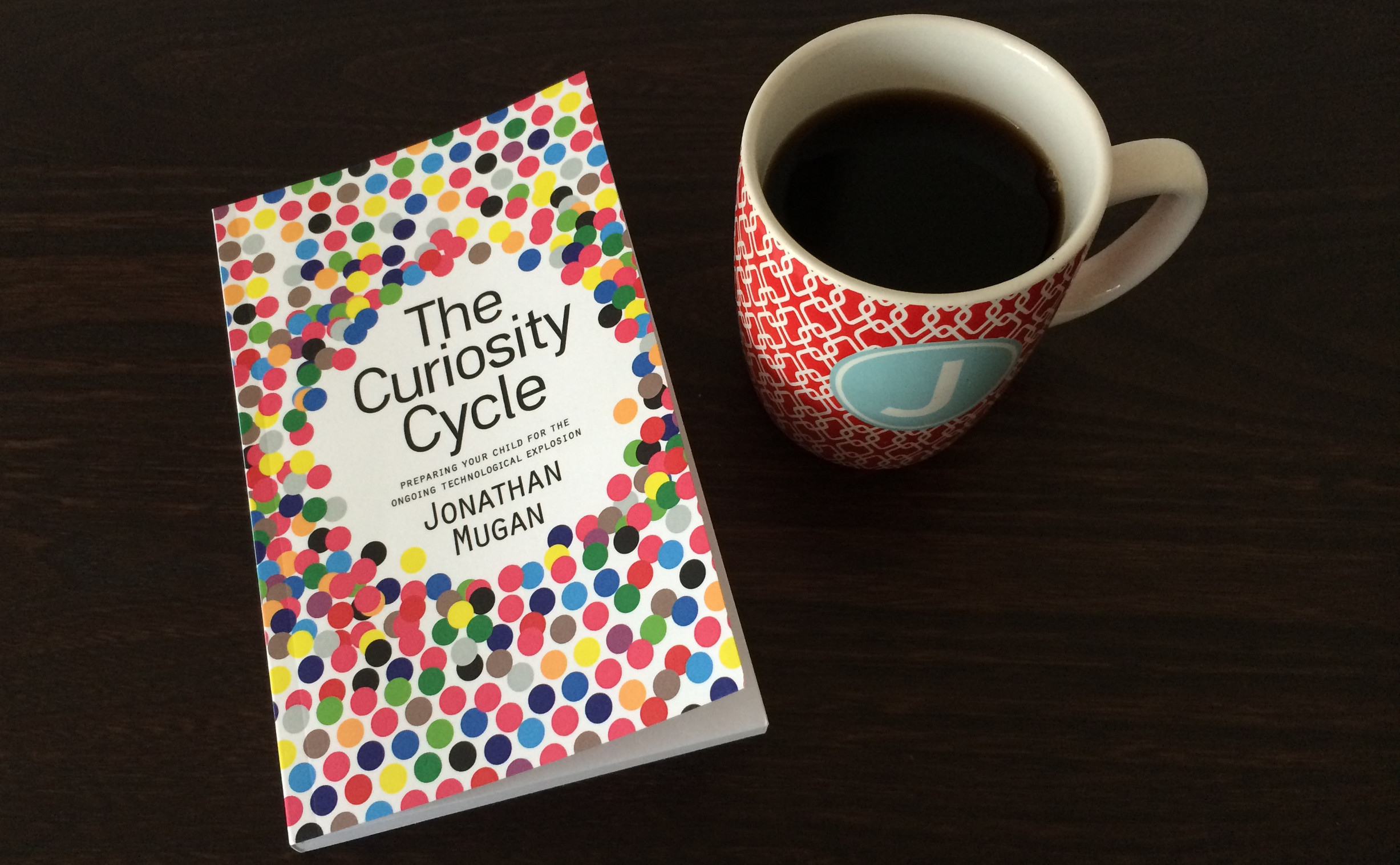
The Curiosity Cycle: Preparing Your Child for the Ongoing Technological Explosion
The second edition is now available!
Get it on Amazon.com!Description
The Curiosity Cycle is a book for parents and educators who want to teach their children to be active explorers of the world. Learning through curiosity leads to adaptive thinking because your child is continually trying to improve his or her understanding of the world, and new facts and ideas become embedded in the knowledge that your child already has. Curiosity will also enrich your child's life because curiosity-based learning is internally directed and intrinsically motivated.
Our world is rapidly changing, and our children must be able to filter the cacophony of voices in cyberspace to stay true to their own values. With the advance of new communication mediums surrounding the Internet, it is now increasingly difficult to shelter children from opinions that we find objectionable. The Curiosity Cycle can help parents and teachers instill in their children the necessary self-awareness and independent thinking ability needed to combat negative outside influences.
Our children must also be prepared for the profound effect computers are having on our society. These changes brought by computers are reshaping the employment landscape, and the success of our children will be determined in part by their ability to create new artifacts with technology. On an even larger scale, technology makes it is easy for us to be passive consumers because we are now bombarded with more entertainment options than ever. The Curiosity Cycle will help you to teach your children to define themselves as active creators instead of passive consumers.
Praise for The Curiosity Cycle
"If Mugan starts his book with wisdom that would have been familiar to our grandparents, he ends it with wisdom that seems to come from our future grandchildren." Singularity Hub
"The book overflows with informative bites that you will want to quote to everyone you know. If you're at all interested in learning, education, child development, or even how adults learn and think, The Curiosity Cycle is a must read." GeekDad
The Curiosity Cycle "offers very helpful 'games' or strategies that parents can use to encourage not only curiosity, but critical thinking in their children . . . If you have an interest in fostering your child's curiosity (and what parent doesn't), then take a look at this book." The Thoughtful Parent
"The world will only become a more complex place technology-wise, and our children will need to know how to interact with it while still remaining free-thinking, active members of society. Mugan maps out seven concrete tactics parents can take to encourage their child's natural curiosity and ensure they don't lose their desire to learn." Babble
"Before I read The Curiosity Cycle I didn't realize just how phenomenal this technological world is, and I had no idea how to integrate my children safely into it. As a computer scientist with a PhD, Mugan blends science and philosophy with humor in a short book that is an invaluable guide for anyone living in today's technological world." Juno Magazine
Author Bio
Jonathan Mugan received his Ph.D. in Computer Science from the University of Texas at Austin. His thesis was centered in developmental robotics, which is an area of research that seeks to understand how robots can learn about the world in the same way that human children do. He received his B.A. in Psychology from Texas A&M University. He has three children.